
Ok, we’ve officially entered the long cold stretch that is January and February in Wisconsin, so let’s talk about keeping our homes warm! When it comes to winterizing your home there are many things to think about. In this first of a two-part series I will be talking about how to identify the signs of home heat loss and what can be done about it. If your attic is not correctly ventilated or not adequately insulated, you might not only be paying more monthly on your heating bill, but could also end up with roof damage.
Signs to Look For
In the late fall or winter, after a hard frost or light snow, go outside first thing in the morning (before the sun has a chance to warm things up) and look at your roof. If you have heat loss you will be able to see where your trusses are because the frost and snow will melt faster between the trusses. Also if your neighboring houses are the same height and those houses have snow on them and yours doesn’t, you could have heat loss. Another sign of heat loss is ice dams. This happens when the snow melts on your roof and then freezes at the edge of your roof. Ice dams are a symptom of the larger problem of home heat loss. If you need to address the ice dam, roof heat tape or roof calcium chloride pellets are useful. However, this is only the a solution to alleviating ice dams, remember, they will continue to occur if the underlying cause (home heat loss) is not addressed.
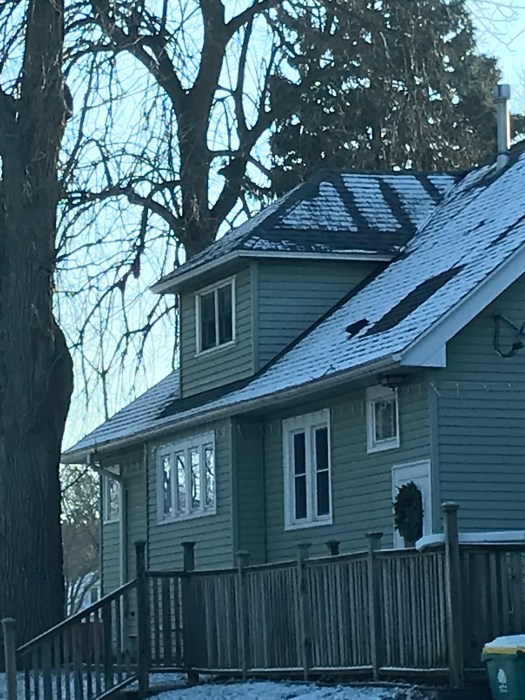
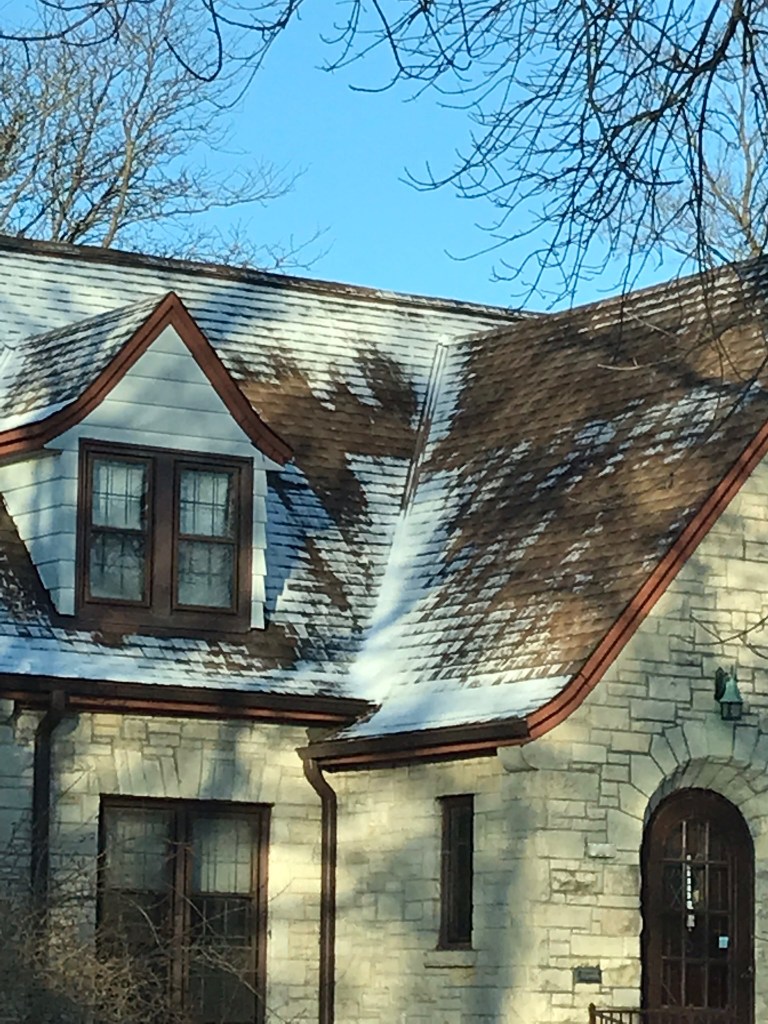
These images show examples of heat loss from the roof.
Addressing the Issue with Insulation and Airflow
We can address heat loss with better insulation and air flow. Attic spaces are now required to have R-30 insulation. This has not always been the case so if you live in an older home, you may need to replace your insulation. Air flow is also important. Newer homes now let outside air in through the eaves and vent out at the top of the peak. This helps to maintain a consistent temperature throughout the attic space. Again, if you have an older home, you likely do not have such venting and may have poor air circulation in the attic. Vents under eaves and roof peaks can be added to enhance air flow. Further, if you have HVAC pipes running in the attic any leaks in them will also need to be sealed up or replaced.
If you need help assessing your heat loss or replacing insulation in your spaces, contact me!
Please like this post if you found it helpful or write me a comment below.
 Cream City Maintenance & Remodeling, LLC