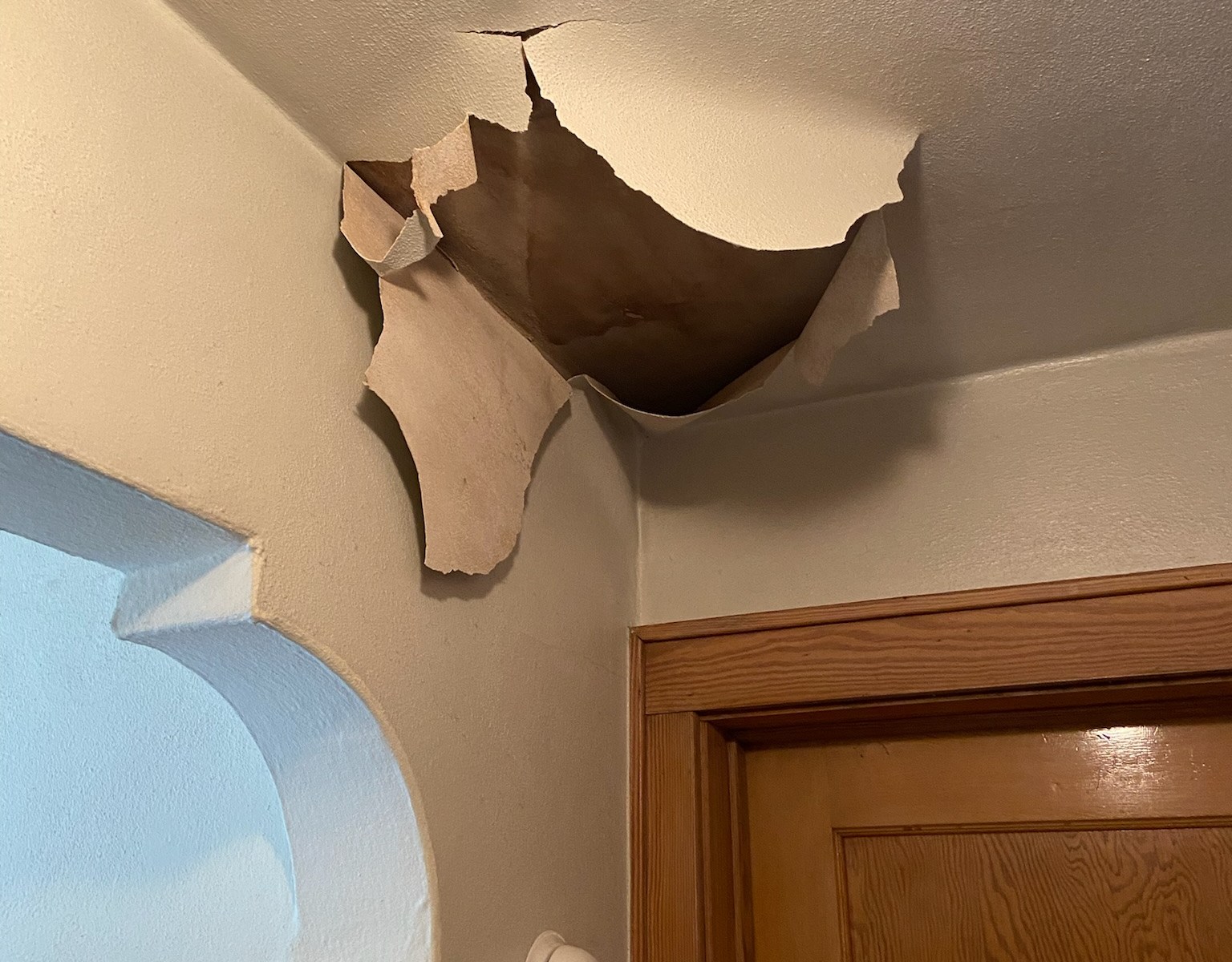
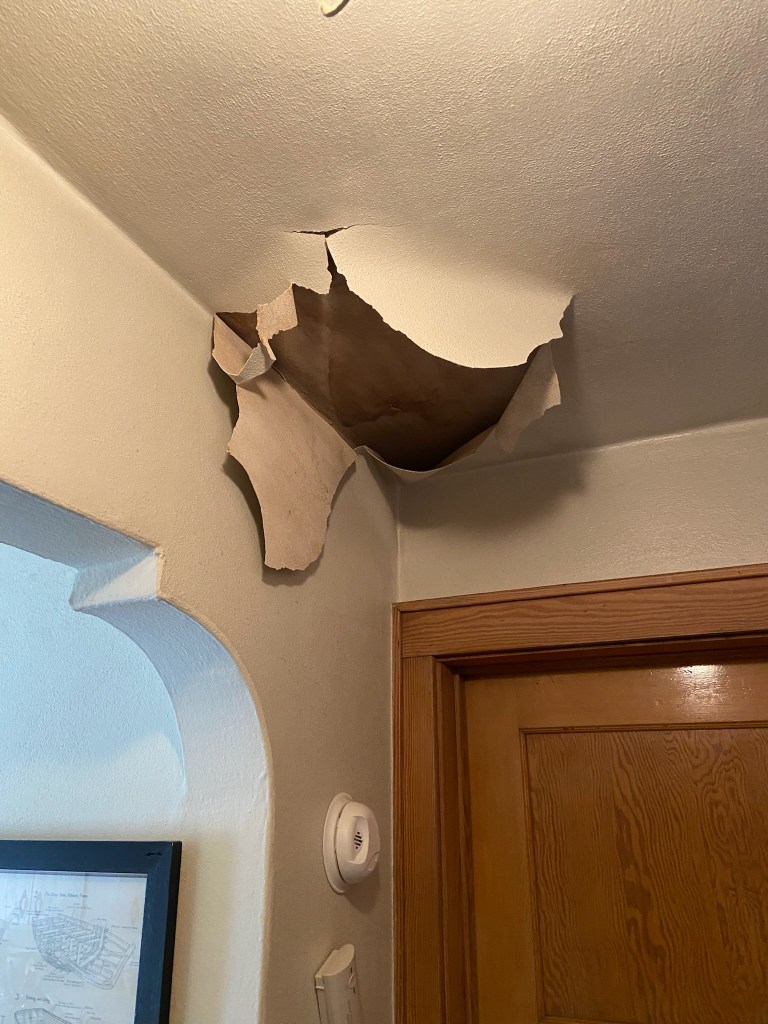
Hello! In the last blog I posted, we talked about water damage on the outside of your home. Now it is time to talk about water damage inside the home. (Cue dramatic music).
As we think about water damage inside the home it should come as no surprise that where water is running (kitchens, bathrooms and wet bars, etc) you are most likely to have water leak issues. So, let’s talk through the top 4 areas I commonly see water leaks.
Problem Area #1: Under sinks. Cabinets under sinks where faucets, supply lines and plumbing pipes live have great potential for leaks. When looking for water leaks, I recommend checking higher up and working your way down. Just because you can see a drop of water lower on a pipe, for example, doesn’t mean the leak didn’t start up higher. When water starts to leak onto a cabinet, it can leave stains on the wood or the wood can start to swell. If left unchecked, it can wreck the cabinet and possibly even the flooring underneath.

Problem Area #2: Showers and tubs. Over time caulk can crack or shrink. When this happens water gets into the walls behind the tub and shower and causes damage to the wall and wood framing. Plumbing leaks from drains or plumbing under tubs and showers can damage the ceiling underneath if not caught right away. Once water gets behind tile and into the wall it turns into a costly expense. Walls need to be opened up and tiling will have to be redone.
Problem Area #3: Water supply lines to dishwashers and refrigerators. Over time supply lines can wear out or get pinched. When this happens the water line fails, leading to a leak. Most time this causes a large amount of water to run out from under the appliance. As long as this is found in a timely manner it is an easy fix. Before you have a problem, know where the shut off to the appliance is and mark it with a tag of some kind. That way, in a water leak emergency, you will be able to quickly shut off the water and address the leak.
Problem Area #4: Laundry rooms. If your laundry room is in in the basement with a floor drain, you can rest pretty easy. However, if you have a main floor laundry room without a floor drain, there are some precautions you can take to protect your home. You can buy a pan that the washing machine sits in. Just remember, a pan under your machine can only hold so much water so finding the leak quickly is key.
I hope this helps you stay on top of those potential home water leaks. As always, if you have water damage issues or questions, please do not hesitate to contact me!
Please like this post if you found it helpful or write me a comment below.
 Cream City Maintenance & Remodeling, LLC